Saturday, June 13, 2015


Friday, June 12, 2015
Gov. Nikki Haley Signs Bill Giving Stiffer Penalties, Gun Ban for Domestic Violence Crimes
 Surrounded by advocates and lawmakers in the Statehouse lobby, Gov.
Nikki Haley on Thursday signs the domestic violence bill stiffening
penalties, barring offenders from possessing guns and requiring
education. Paul Zoeller/Staff
Surrounded by advocates and lawmakers in the Statehouse lobby, Gov.
Nikki Haley on Thursday signs the domestic violence bill stiffening
penalties, barring offenders from possessing guns and requiring
education. Paul Zoeller/Staff Local news
South Carolina on Thursday took a step toward better protecting victims and punishing batterers after more than a decade as one of the deadliest states for women at the hands of men.
Surrounded by lawmakers who fought for tougher penalties and a partial
gun ban for offenders and victims advocates in the Statehouse lobby,
Gov. Nikki Haley signed the domestic violence reform bill passed by the
House and Senate after months of brinkmanship and negotiations.
“A huge statement is being made today and that is that South Carolina
is no longer thinking about the convenience of the abuser,” Haley said.
“South Carolina is thinking about strengthening the survivor.”
State Attorney General Alan Wilson, who lobbied lawmakers to give
prosecutors the tools they needed to lock up repeat offenders and get
others into treatment, said Thursday the law represents a milestone for
South Carolina.
FAB Defense’s New Gotcha Hat, The Go Anywhere Self Defense Tool

Ammoland
When it comes to personal protection, why not be proactive?
The ultimate concealed self-defense tool from FAB Defense, the Gotcha Hat can go with you where other weapons are prohibited.
The less-lethal self-defense tool is hidden in plain sight adding confidence to any individual wearing the hat under any set of circumstances.
The tool is made of MIL-SPEC reinforced polymer composite, so it won’t trigger metal detectors and is mounted into the brim of a stylish hat so your attacker will never see it coming.
Martial arts experts Dov Granchrow and Yaron Hanover designed the Gotcha hat so that individuals, even when wearing little clothing (such as shorts or swimsuits), would never be caught empty-handed. The Gotcha can be drawn easily from the holding mount within the brim of the hat in a non-threatening motion, which will catch your attacker off guard. Not only will users confidently defend themselves, they’ll have the last word: Gotcha. The personal-defense tool enables quick pressure point standoff as well as restraining and disarming techniques.
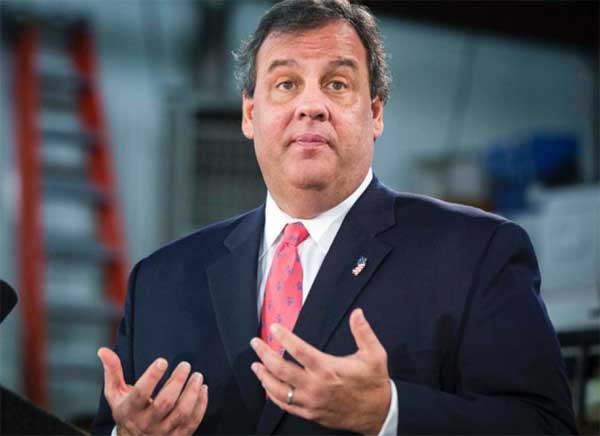
Gov. Christie: Blame Democrats For NJ Gun Laws, Not Me
Ammoland
On June 9 2105, New Jersey Governor Chris Christie (R) responded to a questions about gun control in his state by blaming Democrat legislators.
According to NJ.com, Christie was speaking at the Saint Anselm Institute of Politics, where he took questions from audience members.
When asked about the death of Carol Bowne – the Berlin Township resident who was killed in her own driveway while waiting on state permission to own a handgun for self-defense–Christie said;
“I’m dealing with a Democratic legislature — that’s what New Jersey’s given me. They have a very, very different view of the Second Amendment than I do. But they’re going to have to answer for these things.”He did admit that Bowne’s death will focus attention on gun control for a time, but said he is not sure any real change to the gun control laws will result. He put it this way:
“The Carol Bowne situation is going to force more conversation in our state, although I am not confident that it will change.”
Thursday, June 11, 2015
Supreme Court Rejects NRA Challenge To San Francisco Gun Rules
NPR
The U.S. Supreme Court has declined to block two San Francisco gun control measures that were fiercely opposed by the National Rifle Association. At least one veteran court observer says the high court's decision raises questions about how the justices interpret the Second Amendment.
First, the basics: A 2007 San Francisco ordinance requires residents to keep handguns under lock and key or to use trigger locks when they are not carrying their weapons. Another law, dating to 1994, bans the sale of ammunition that expands on impact, or hollow-point bullets.
Plaintiff Espanola Jackson and seven other petitioners, including the NRA, filed suit in 2012. They sought an injunction to keep the lockbox law from being enforced. But in March 2014, the 9th U.S. Circuit Court of Appeals sided with the City and County of San Francisco and left both measures intact.
In their appeal to the U.S. Supreme Court, the plaintiffs repeated the argument they had made all along, claiming that "San Francisco stands alone in insisting that it may deny its residents immediate access to operable handguns in their own homes under the guise of regulating the manner in which they store them." They painted the picture of a law-abiding homeowner who "must fumble for the reading glasses and the lockbox while an intruder roams the premises."
The plaintiffs argued that they had precedent on their side, citing the high court's ruling in District of Columbia v. Heller. In that case, the justices ruled that under the Second Amendment a gun owner has a right to self-defense with a gun available within the home.
But only two justices, Clarence Thomas and Antonin Scalia, voted to review the case. Four of the nine must agree to hear a case.
The U.S. Supreme Court has declined to block two San Francisco gun control measures that were fiercely opposed by the National Rifle Association. At least one veteran court observer says the high court's decision raises questions about how the justices interpret the Second Amendment.
First, the basics: A 2007 San Francisco ordinance requires residents to keep handguns under lock and key or to use trigger locks when they are not carrying their weapons. Another law, dating to 1994, bans the sale of ammunition that expands on impact, or hollow-point bullets.
Plaintiff Espanola Jackson and seven other petitioners, including the NRA, filed suit in 2012. They sought an injunction to keep the lockbox law from being enforced. But in March 2014, the 9th U.S. Circuit Court of Appeals sided with the City and County of San Francisco and left both measures intact.
In their appeal to the U.S. Supreme Court, the plaintiffs repeated the argument they had made all along, claiming that "San Francisco stands alone in insisting that it may deny its residents immediate access to operable handguns in their own homes under the guise of regulating the manner in which they store them." They painted the picture of a law-abiding homeowner who "must fumble for the reading glasses and the lockbox while an intruder roams the premises."
The plaintiffs argued that they had precedent on their side, citing the high court's ruling in District of Columbia v. Heller. In that case, the justices ruled that under the Second Amendment a gun owner has a right to self-defense with a gun available within the home.
But only two justices, Clarence Thomas and Antonin Scalia, voted to review the case. Four of the nine must agree to hear a case.
Fox News Security Contractor in Jail Since May 1st on Gun Charges after Baltimore Unrest
Donald F. Scott was working as security for FOX News amid the unrest on May 1 when he was arrested for carrying two firearms without a permit to carry in Maryland. He remains in jail, awaiting trial on July 1. (Baltimore Sun)
Salon
As several hundred protesters milled around Baltimore City Hall after a citywide curfew went into effect May 1, a mounted city officer on Fayette Street said he spotted a man holding handcuffs and an ammunition box.
Officer John Potter then watched Donald F. Scott — who was working as a security guard for Fox News at the time — open the rear hatch of a Chevy Suburban and pull a Glock handgun from his waistband, according to the officer's account.
Scott, 50, has been in jail since the incident, held on $350,000 bail on two gun charges, according to the Baltimore public defender's office.
During the unrest following the death of Freddie Gray, a number of national media outlets reported from Baltimore's streets. Television networks such as Fox provided security to accompany reporters and personalities, including Geraldo Rivera.
Subscribe to:
Posts (Atom)