Local news reports
The Violence Policy Center has just released a report that says that in American in 2013, Louisiana was only second only to Alaska in the number of gun deaths per capita.
You might be inclined to put a positive spin on that news - because the
last report from the group put Louisiana at the very top of American
gun casualties.
The VPC draws a strong correlation between rates of gun ownership and rates of gun deaths.
But that seems to be a rather obvious point: sort of like saying that
the number of children drowning inside their homes increased with indoor
plumbing. It's not necessarily shocking that the number of gun deaths
in a state jibe somewhat with the number of guns owned by residents of
that state.
Besides, relative to the other states that lead the nation in gun
deaths, Louisiana's gun-ownership rate is low. With a 45.6 percent rate
of household gun ownership, Louisiana trails Wyoming, Mississippi and
Alabama. Yet it has more gun deaths than all of them.
So, assuming the accuracy of the figures the Violence Policy Center
is using, there's something other than the mere presence of guns that's
driving deaths from guns.
What is it? I'm sure folks here - at least when they feel safe in
doing so - would say that it's the presence of black people that drives
up the rate of gun deaths. But there aren't many black folks in Alaska -
only 3.9 percent. And black people make up only 1.7 percent of the
population in Wyoming, the state that rounds out the top five in gun
deaths. The presence of those two states on the list should help us talk
about guns and gun deaths in a way that doesn't fixate on supposed
black pathology.
Showing posts with label gun violence. Show all posts
Showing posts with label gun violence. Show all posts
Wednesday, February 4, 2015


Friday, January 9, 2015
Number of Shootings is Increasing
Bureau of Justice Statistics
Since 2008 the number of non-fatal incidents of gun violence has been increasing. Interestingly, that perfectly coincides with the extremely high gun sales that followed Obama's election.
So, as we pointed out in another post recently, the murder rate is basically static (or declining slightly) while the number of shootings is increasing.
More guns means more crime. What a surprise.
Since 2008 the number of non-fatal incidents of gun violence has been increasing. Interestingly, that perfectly coincides with the extremely high gun sales that followed Obama's election.
So, as we pointed out in another post recently, the murder rate is basically static (or declining slightly) while the number of shootings is increasing.
More guns means more crime. What a surprise.
Sunday, September 7, 2014
Portraits of Gun Violence: Michael Hampson
If you've noticed one thing about this series: it should be that the death of the child has led to the mother becoming involved in the movement to end gun violence.

That is very true about Mari Bailey whose son, Michael Hampson was shot and killed in 2004. Her son may have passed, but Mari keeps his memory alive.
Michael was shot and killed by someone who he thought was a friend.
Michael was attending culinary school that night — he dreamed of becoming a chef — and he was supposed to be in school until 10:30 p.m., but the teacher dismissed the class 30 minutes early. Michael drove to a friend’s house.
There were seven people at the house, including his friend’s mom. The mom wanted to buy a new TV, so Michael volunteered to take her to Wal-Mart since he was the only one with a car. While she was getting ready, her son — he was also Michael’s friend — became angry.
No one knows what set him off, but he pulled a gun and pointed it at everyone in the house. Eventually, the shooter aimed the gun at Michael’s chest. He was about a foot away when he pulled the trigger. The bullet went through my son’s chest and became lodged in a kitchen cabinet. Michael collapsed, but he wasn’t dead.
Unfortunately, everyone in the house panicked and instead of calling 911, they made up a story and decided to hide the gun. It was then that they finally called 911. I have no idea how long it took them to come up with the story and hide the gun, but as they sat there trying to cover up what had happened, Michael lay there, on a dirty kitchen floor, bleeding from his chest and mouth.
When they finally called 911, the caller said, very nonchalantly, “My homeboy’s been shot. Someone broke into the house and shot him.” Because it was a crime scene, the paramedics were not allowed in to help Michael. The police had to secure the scene.
Michael was taken to the trauma ICU at St. Joseph’s hospital where he was placed on life support. On the fourth day, the doctors started doing brain activity tests on Michael. He was pronounced brain dead at 3:13 p.m. on August 21, 2004. I worked with the Donor Network of Arizona to donate all of Michael’s organs, tissue, bones, corneas, skin — everything viable was donated to help save or improve the lives of more than 75 people.
That is very true about Mari Bailey whose son, Michael Hampson was shot and killed in 2004. Her son may have passed, but Mari keeps his memory alive.
Michael was shot and killed by someone who he thought was a friend.
Michael was attending culinary school that night — he dreamed of becoming a chef — and he was supposed to be in school until 10:30 p.m., but the teacher dismissed the class 30 minutes early. Michael drove to a friend’s house.
There were seven people at the house, including his friend’s mom. The mom wanted to buy a new TV, so Michael volunteered to take her to Wal-Mart since he was the only one with a car. While she was getting ready, her son — he was also Michael’s friend — became angry.
No one knows what set him off, but he pulled a gun and pointed it at everyone in the house. Eventually, the shooter aimed the gun at Michael’s chest. He was about a foot away when he pulled the trigger. The bullet went through my son’s chest and became lodged in a kitchen cabinet. Michael collapsed, but he wasn’t dead.
Unfortunately, everyone in the house panicked and instead of calling 911, they made up a story and decided to hide the gun. It was then that they finally called 911. I have no idea how long it took them to come up with the story and hide the gun, but as they sat there trying to cover up what had happened, Michael lay there, on a dirty kitchen floor, bleeding from his chest and mouth.
When they finally called 911, the caller said, very nonchalantly, “My homeboy’s been shot. Someone broke into the house and shot him.” Because it was a crime scene, the paramedics were not allowed in to help Michael. The police had to secure the scene.
Michael was taken to the trauma ICU at St. Joseph’s hospital where he was placed on life support. On the fourth day, the doctors started doing brain activity tests on Michael. He was pronounced brain dead at 3:13 p.m. on August 21, 2004. I worked with the Donor Network of Arizona to donate all of Michael’s organs, tissue, bones, corneas, skin — everything viable was donated to help save or improve the lives of more than 75 people.
Mari had to try and make sense of Michael’s death. She researched
how to prevent gun violence and came across the National Million Mom
March website. Mari wanted to stop another family from experiencing what She
had experienced. Mari started the Greater Phoenix Million Mom March chapter
a year after Michael was killed.
Anyone who knows Mari knows that she misses her son very much:
I miss hearing Michael’s voice. I miss his laughter. I miss his hugs and I miss his blue eyes. I miss him more than anything.
It definitely does not get easier. Though it has become easier to keep my feelings bottled up so I can, somehow, cope, day-in and day-out, the pain never goes away. Some days, the pain is so unbearable, you feel like it will kill you. If you are lucky — with a lot of time and grief work — the pain will become more gentle and that’s the best you can ever hope for.
Saturday, September 6, 2014
Portraits of Gun Violence: Jessica Ghawi

Part of the reason I'm writing this is that I know her mother who is coping with this incident. I see Jessi's face and I think of the interview she did where she was wearing high heels on the ice at a hockey rink. She kept falling down, but that didn't stop her from trying.

“She would walk into a room, and the place would light up. She was a jolt of lightning,” her mother, said through tears Saturday. “She just had a spirit that was larger than life.”
You didn't even need to meet her to feel her energy as this remembrance of her attests:
 caitykauffman.wordpress.com/2012/07/20/a-letter-to-jessica-ghawi-victim-of-the-colorado-shooting/
Maybe that's why I am writing this post.
I understand that she started a charity before she died to provide Sports Equipment for underprivileged children that recently held a drive to collect sporting gear.
Jessica may have died that night, but she is not a "victim" as her energy will carry on a live until something is done about this plague.
And for you hoaxers, I can assure you that Jessica Ghawi is quite dead and not physically present in this reality. Her spirit may be strong, but her physical presence is no longer with us.
Friday, September 5, 2014
Portraits of Gun Violence: Patrick McKinley
I'll let his mother tell you about her son. This was filmed at an art exhibition of Patrick's art which contained works that his mother hadn't seen:
I think Patrick would want us to remember him, how he died, and do something about this situation from what Jeanette says. Unlike Colin Goddard and Stephen Barton, Patrick didn't survive to fight on, which means we need to continue the work to end this problem.
We aren't doing anything other than swim in the blood of the victims since there is so much of it soaked in the land.
I think Patrick would want us to remember him, how he died, and do something about this situation from what Jeanette says. Unlike Colin Goddard and Stephen Barton, Patrick didn't survive to fight on, which means we need to continue the work to end this problem.
We aren't doing anything other than swim in the blood of the victims since there is so much of it soaked in the land.
Wednesday, September 3, 2014
Ever-growing Tribute to Gun Violence Victims in America
Pretty short to do justice to this topic.
It's not "dancing on the graves/in the blood of" or any of your other bullshit excuses for not paying attention to the victims of gun violence since the families live with it. This was shared to me by one of the victims pictured in it. The families of the people who are pictured here are active in the movement to end gun violence.
I don't know if Denise Decker or Nancy Faber are in this, but there are many people who have been victims who are remembered by only a few.
The time is long past for action as the number on this list grows longer on a daily basis.
Here's the latest numbers:

It's not "dancing on the graves/in the blood of" or any of your other bullshit excuses for not paying attention to the victims of gun violence since the families live with it. This was shared to me by one of the victims pictured in it. The families of the people who are pictured here are active in the movement to end gun violence.
I don't know if Denise Decker or Nancy Faber are in this, but there are many people who have been victims who are remembered by only a few.
The time is long past for action as the number on this list grows longer on a daily basis.
Here's the latest numbers:
Thursday, August 14, 2014
Ah, the irony....
After imagining a world where elevators opening are the big news of the day, along comes a reality check of what an armed society is actually like with a story of someone being shot outside an
Police say this shooting may have resulted from an argument.
Excuse me, we shouldn't say "shooting", even if that is what happened, since that somehow implicates guns as being a problem. This is despite the fact that there probably would have only been a scuffle had there not been a gun present.
A person was "Second Amendmented" outside an anti-violence concert.
Police say this shooting may have resulted from an argument.
Excuse me, we shouldn't say "shooting", even if that is what happened, since that somehow implicates guns as being a problem. This is despite the fact that there probably would have only been a scuffle had there not been a gun present.
A person was "Second Amendmented" outside an anti-violence concert.
Thursday, July 31, 2014
Wednesday, July 23, 2014
Tick, Tock, Glock
One of the problems with the gun violence debate is that it tries to be scientific in how it presents the issue. That works well if you just want to go by numbers. But numbers don't always get the point across.
The "pro-gun" side has used emotion (fear) to get its point across for ages.
The blog "Thoughts at Large" came up with a really great post, Tick, Tock, Gloc, which poins out how the numbers play out:
Now repeat this, every day, until enough of us demand a better society.
The "pro-gun" side has used emotion (fear) to get its point across for ages.
The blog "Thoughts at Large" came up with a really great post, Tick, Tock, Gloc, which poins out how the numbers play out:
According to the Brady Campaign, on average, for the five most recently available years for which statistics are available, every day in America there are:The rest of the blog does a good job of how this plays out in reality.
291 people in America are shot (including 52 children (ages 0-19)87 people die from gun violence:32 are murdered (including 6 children)51 kill themselves (including 2 children)2 die unintentionally1 is killed by police intervention1, intent unknown205 are shot and survive:148 shot in an assault (including 34 children)10 survive a suicide attempt (including 1 child)45 are shot unintentionally (including 9 children)2 are shot in a police interventionIf we take these numbers and divide them equally over the course of a day, this is an average day in America.
Now repeat this, every day, until enough of us demand a better society.
Thursday, July 17, 2014
Is ‘Dawn Of The Planet Of The Apes’ Anti-Gun?
MTV dot com
The critics and the people have spoken, and “Dawn of the Planet of the Apes” is a bona fide summer success.
The sequel to the 2011 James Franco reboot “Rise of the Planet of the Apes” is a stunning achievement for motion capture acting and definitely an action-heavy blockbuster, but much of the buzz surrounding the film has largely centered around how refreshingly profound and thoughtful it is — particularly on the issue of violence. Gun violence, to be exact. “You’ll hear instances where actors have said, ‘I won’t appear in a movie poster with guns,’ or directors will say, ‘I will never put a gun in my movie,’ but there certainly aren’t many examples where [blockbusters] tackle this head on,” Dan Gross, President of the Brady Campaign to Prevent Gun Violence, told MTV News over the phone. “In this case, it very compellingly shows that before the gun was introduced, a fight was a fight. And now, when a gun is introduced, it has a much greater chance at turning lethal.”
Saturday, July 12, 2014

Wednesday, June 25, 2014
Louisiana Leads Nation in Gun Deaths - Mississippi, Alaska, Wyoming and Montana Close Behind
Louisiana had the highest gun-related deaths per capita in the nation in 2011, a new study shows.
gun-related deaths per capita in the nation in 2011, a new study shows.
The study was conducted by the Violence Policy Center, a nonprofit group working to deter gun violence.
was conducted by the Violence Policy Center, a nonprofit group working to deter gun violence.
It analyzes data released last week by the Centers for Disease Control and Prevention that say guns killed 865 Louisiana residents in 2011. That translates into 18.91 gun-related deaths for every 100,000 people in the state.
released last week by the Centers for Disease Control and Prevention that say guns killed 865 Louisiana residents in 2011. That translates into 18.91 gun-related deaths for every 100,000 people in the state.
Mississippi, Alaska, Wyoming and Montana round out the top five states with the highest gun-related death rates.
According to the group, Louisiana's ranking is because of weak gun-ownership laws and a high rate of per-capita gun ownership. An estimated 45.6 percent of the state's residents own guns.
rate of per-capita gun ownership. An estimated 45.6 percent of the state's residents own guns.
“Gun violence is preventable, and states can pass effective laws that will dramatically reduce gun death and injury,” Violence Policy Center Executive Director Josh Sugarmann said. “Our analysis shows that states with weak gun violence prevention laws and easy access to guns pay a severe price with gun death rates far above the national average.”
Executive Director Josh Sugarmann said. “Our analysis shows that states with weak gun violence prevention laws and easy access to guns pay a severe price with gun death rates far above the national average.”Thursday, May 29, 2014
Since Columbine
The more people die, the more the NRA stokes hate & fear & more guns are sold.
#NHPolitics #NotOneMore #Everytown pic.twitter.com/hJfct5mEjv
— Sharon Chabot (@nhdogmom) May 29, 2014
Thursday, April 17, 2014
"Columbine: Wounded Minds" Documentary
ABC
Samuel Granillo survived the 1999 shooting at Columbine as a 17-year-old junior. He was in the cafeteria when the shooting started and found himself hiding from the shooters in a nearby supply room with 17 other terrified students. The supply room's door had no lock and Sam soon heard the shooters' voices on the other side. Sam immediately understood that if he couldn't keep the door shut everyone in the room would probably die.
Now 32 years old, Sam is still struggling with the traumatizing memories of the violence he encountered that day. Even though they're ever-present, he is able to live a fairly normal life for eleven months of the year — but everything changes when the month of April comes around.
"It's spring. The weather is beautiful. Everything is blooming with life. And all I think about is death," Sam says.
And he's not the only one. Fifteen years after the massacre, the lives of many Columbine survivors come to a stand-still as the shooting anniversary nears.
Tuesday, April 1, 2014
Monday, March 24, 2014

Tuesday, March 11, 2014
How the Firearms Industry is Responsible for America´s Gun Violence Epidemic
America is a violent place by any standard. The national firearm-related death rate has held steady at 10.5 per 100,000 people since 1999, well above the global average. Some of its cities exhibit epidemic rates of gun death on par with crime-affected urban centers in Latin America and the Caribbean. Hard as it might be to believe, levels of lethal violence are actually at historic lows.
Declines occurred after the passage of specific legislation designed to prevent gun-related deaths. Gun homicides dropped after the passage of the Brady Handgun Violence Prevention Act (1993), the Violent Crime Control and Law Enforcement Act or so-called Assault Weapons Ban (1994), and the FBI’s National Instant Criminal Background Check System (1998). In the absence of significant federal legislation over the past, further reductions in gun violence have stalled.
It is worth putting the United States’ exceptional gun violence problem into perspective. The country´s firearm homicide rate is over six times higher than neighboring Canada’s, and 45 times as high as England’s. With the highest rates of gun homicide, suicide and accidental death in the industrialized world, it is not surprising that Americans also feel afraid.
The percentage of Americans who fear walking alone at night has increased since 2001 to nearly 4 in 10 in 2011. And yet national authorities have consistently refused introducing measures to curb gun violence. Strangely, Congress has opted instead to undermine gun control legislation, curb gun safety awareness, and abandon violence prevention programs, including some that registered positive results.
Meanwhile, in many states, laws intended to promote the responsible use of guns are being repealed. Instead, legislation that reproduces irresponsible firearms use – including so-called “stand your ground” laws – are being pursued. So what explains America’s reversal on gun control?
Concerted efforts to roll back progressive gun regulation began by stealth. They started with quiet lobbying campaigns to reduce American citizens` capacity to diagnose firearm-related violence and thus fully apprehend the magnitude of the problem. In 1996 under considerable pressure from the pro-gun lobby, Congress de-funded firearms-related public health research at the Centers for Disease Control and Prevention (CDC) by 96 percent. To put this in perspective, resources devoted to firearms research constituted just 0.0018 percent of the CDC´s 2013 budget. Given that firearm deaths constitute around 1.3 percent of total national mortality, it could be reasonably argued that the CDC’s gun-related research program should have been roughly 722 times larger.
Meanwhile, the Bureau for Alcohol, Tobacco, Firearms and Explosives (ATF) has been prohibited since 1978 from compiling meaningful data on firearms sales. Moreover, its field offices in states bordering Mexico where illegal arms trafficking is rife are underfunded and understaffed.
More recently, a 2013 Congressional rider stripped the ATF of the authority to compile data on the very gun stores it licenses – data that the authors have made use of to estimate US-Mexico arms trafficking. Making matters worse, the Federal Bureau of Investigation (FBI) is prohibited since 2003 from gathering data for the National Instant Criminal Background Check System (NICS) that it is mandated by law to administer on behalf of gun stores.
Without such detailed data, it is easy to misdiagnose the causes and consequences of gun violence, and therefore mis-prescribe the interventions needed to prevent it. Indeed, many lawmakers have expressed reluctance to pass gun legislation, arguing that they are (purportedly) ineffective. For instance, some pundits have argued that the massive stockpile of firearms in Americans hands renders firearms sales legislation impotent.
The gun-rights fanatics have some tricky ways to deny these obvious facts. One thing they love to do is disparage any talk of "gun deaths" because they include suicides. It's convenient for them to pretend that people who commit suicide are simply making a choice that is their right. Of course, nothing could be further from the truth. Most suicides are attempted out of mental illness, often temporary and passing conditions.The other way they disparage inconvenient statistics is by claiming that overall murder rates are not conducive to the gun control argument and that's why we only look at gun-violence. Well, in this case I think they work pretty well either way. According to this article, firearm homicides are "over six times higher than neighboring Canada’s, and 45 times as high as England’s." When you consult the list of OVERALL murder rates by country you still see a huge difference between the US and Canada and the US and England.
As far as blocking research and data-keeping as a way of preventing useful diagnosis of the problem, well they just deny that outright. That's always they're fall-back position.
Friday, February 14, 2014
Putting a face to gun violence--Ryanne Mace
I know you like to say we are "dancing on the graves of the victims" when we try to put a face to gun violence, but I have a serious problem thinking that Ryanne would be upset by using her memory to make a point on this issue. I am pretty sure her parents wouldn't mind since they are active in the movement (her mother, Mary Kay, previewed this and suggested some edits to this post).
Ryanne was one of five students who were killed 6 years ago at Northern Illinois University. I know that she was only one of the victims, but she shows how the event impacted her family and her friends. It also effected the entire NIU community. I'll add that Ryanne was an only child.
But this video tribute from Tom Frey is one that really sticks in my mind. Not only is it a tribute to Ryanne, but it is the memory of someone who knew her. It shows the effect that gun violence has on people:
This is another of the many tributes to Ryanne that I found while trying to find the one by Tom:
This is Ryanne's mother talking about her being active in the Gun violence prevention movement:
A toast to Ryanne Mace, a lovely young woman who was taken from this world far too early. Your memory is contributing to making the world a better place. Who knows how much better the world would be if you were still alive.
Ryanne was one of five students who were killed 6 years ago at Northern Illinois University. I know that she was only one of the victims, but she shows how the event impacted her family and her friends. It also effected the entire NIU community. I'll add that Ryanne was an only child.
But this video tribute from Tom Frey is one that really sticks in my mind. Not only is it a tribute to Ryanne, but it is the memory of someone who knew her. It shows the effect that gun violence has on people:
This is another of the many tributes to Ryanne that I found while trying to find the one by Tom:
This is Ryanne's mother talking about her being active in the Gun violence prevention movement:
A toast to Ryanne Mace, a lovely young woman who was taken from this world far too early. Your memory is contributing to making the world a better place. Who knows how much better the world would be if you were still alive.
Saturday, January 25, 2014
Another type of welfare
According to an Urban Institute Study called The Hospital Costs of Firearms Assaults fount that about 80 percent of the cost of treating victims of gun violence in 2010 was borne in part by taxpayers. That means taxpayers paid for victims' care either through government
programs like Medicaid or through publicly-funded programs that
subsidize hospital care for those who don't have insurance and can’t
afford to pay.
“The victims are concentrated among young, poor males,” said the report's author, Embry Howell, a senior fellow at the Urban Institute. “This is the population we’re talking about and their costs are very high. It's one group that is heavily uninsured."
Hospitals in the U.S. spent $630 million in 2010 treating the victims of gun violence -- everything from minor gunshot wounds to injuries that required days-long stays -- and public funds provided most of that money. The Medicaid costs of gun violence alone that year amounted to approximately $327 million.
Notably, the report found that the average cost of a hospital visit for a gun violence victim is $14,000 more than that of the average hospital stay, due to the severity of the injuries often involved.
Although, the true economic cost of gun violence is much larger that what hospitals are spending on care. The Centers for Disease Control and Prevention estimated that gun violence deaths cost the U.S. economy $37 billion and gun injuries $3.7 billion in 2005, the last year the public health agency conducted an analysis. In addition, taxpayers often end up footing the bill for social services for gun violence victims, as well as building the expensive hospital trauma units needed for their treatment.
One bit of good news:
Many of the victims of gun violence who are uninsured will see their hospital bills go down as President Obama’s health care reform law offers more low-income Americans access to Medicaid in many states.
The Bad News:
But because Medicaid is a government-subsidized program, Howell noted, the cost of gun violence to taxpayers will go up.
In other words, society bears the cost of gun violence, but that's another thing I've been sayiing all along.
“The victims are concentrated among young, poor males,” said the report's author, Embry Howell, a senior fellow at the Urban Institute. “This is the population we’re talking about and their costs are very high. It's one group that is heavily uninsured."
Hospitals in the U.S. spent $630 million in 2010 treating the victims of gun violence -- everything from minor gunshot wounds to injuries that required days-long stays -- and public funds provided most of that money. The Medicaid costs of gun violence alone that year amounted to approximately $327 million.
Notably, the report found that the average cost of a hospital visit for a gun violence victim is $14,000 more than that of the average hospital stay, due to the severity of the injuries often involved.
Although, the true economic cost of gun violence is much larger that what hospitals are spending on care. The Centers for Disease Control and Prevention estimated that gun violence deaths cost the U.S. economy $37 billion and gun injuries $3.7 billion in 2005, the last year the public health agency conducted an analysis. In addition, taxpayers often end up footing the bill for social services for gun violence victims, as well as building the expensive hospital trauma units needed for their treatment.
One bit of good news:
Many of the victims of gun violence who are uninsured will see their hospital bills go down as President Obama’s health care reform law offers more low-income Americans access to Medicaid in many states.
The Bad News:
But because Medicaid is a government-subsidized program, Howell noted, the cost of gun violence to taxpayers will go up.
In other words, society bears the cost of gun violence, but that's another thing I've been sayiing all along.
Saturday, January 11, 2014
Jail Inmate Charged in Fatal Shooting at North Houston Apartments
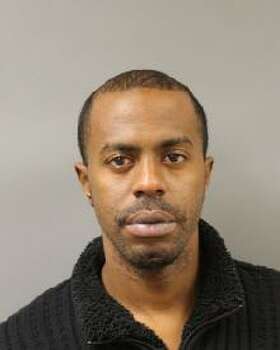
(Photo By HPD) Jacob Brown
Houston Chronicle
A suspect has been arrested in the shooting death of a woman and the wounding of a man last summer as the victims sat in a car in north Houston.
Jacob Brown, 27, is charged with capital murder in the shooting, which occurred about 12:30 a.m. June 27 at 7311 Curry, according to the Houston Police Department.
Police said Titisha Denise Williams, 22, and 33-year-old Damon McClain were in a car in the parking lot of an apartment complex when two men approached them and demanded money. The suspects then shot them more than once and ran away.
Williams died at the scene. McClain, 33, was rushed to Ben Taub General Hospital and was in critical condition. No update on his condition was released.
Investigators later determined Brown was a suspect in the case. At the time he was charged in the shooting he was already in the Harris County jail for an unrelated robbery case.
When asked about the gun used, Brown admitted that a few days previous to the incident, he'd broken into the home of a fat white gun owner and stole it. The gun had been found under the pillow in the main bedroom. The victim of the theft had no comment.
Subscribe to:
Posts (Atom)